Sunday, November 18, 2007

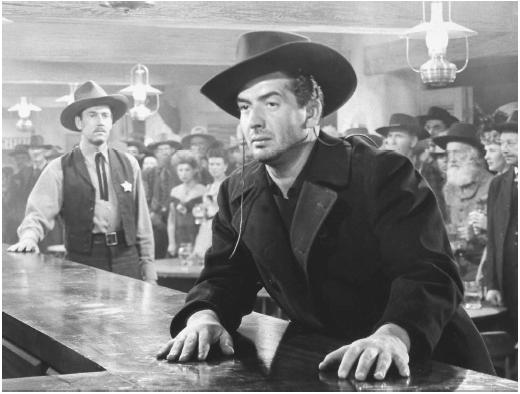
Kiss Me Deadly

I thought the movie, Kiss Me Deadly, by Robert Aldrich is the perfect portrayal of a film noir, which later gave way to the classic detective-type movie such as James Bond. The main character, Mike Hammer, is the foundation that this movie relies on to make it the movie that it was. I also thought that it was interesting how Aldrich decided to add a sci-fi type plot to the movie near the end. Unlike other film noirs, this film used different methods of conveying the story to ultimately be regarded by many critics as the best film noir ever made.

Another unique trait in this movie is that the story had multiple main conflicts; unlike the classic film noir, which usually only had one main conflict. Though at times this kind of plot was confusing, it added another demension to the genre of film noir. This movie was one of the first films to have multiple conflicts, which later gave way to how movies are done today.

In conclusion, I liked the movie because Aldrich did a great job of connecting all of the conflicts of the movie at the end. Most film noirs that were made around this time period never had multiple main characters or multiple conflicts, which made this movie unique. This movie was a milestone for the genre of the classic detective movies for a variety of reasons. This movie also used many different techniques of filming that directors are still using today.

Tuesday, November 13, 2007

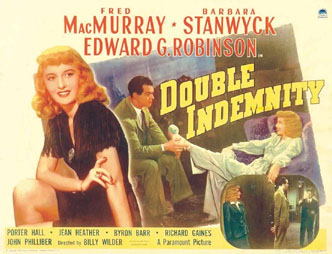
Double Indemnity

The film, Double Indemnity, directed by Billy Wilder, is a true example of the genre of film noir for many different reasons. This movie has all of the common characteristics to be considered a film noir, which helped set the tone for many other movies of this genre that were made during this time period. It is in this genre of filming that directors could get very creative with lighting, make-up, acting, etc.

Though this movie was somewhat "cheesy" in parts, I thought that the director did an excellent job of using every technique possible to his advantage to truly show the potential behind the genre of film noir. I also thought the actors did a great job of staying in character throughout the entire movie. In conclusion, I think that this movie is a great example of how directors can use techniques of filming to create a mood that carries throughout the entire film.

Tuesday, November 6, 2007

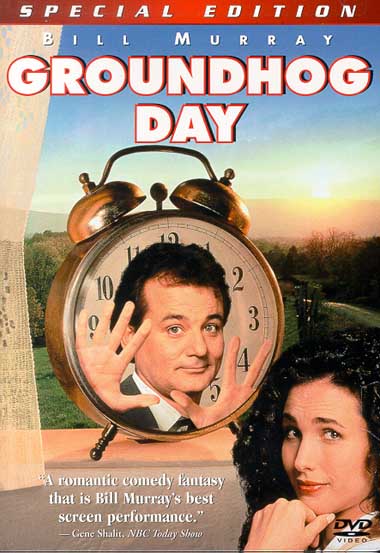
Groundhog Day

The movie Groundhog Day, directed by Harold Ramis, is a true display of what you can do with a camera. I personally thought that it was quite clever how Ramis used the camera to create the story of Groundhog Day in such a unique style of filming. I also thought that Bill Murray did a great job. If it was not for his humor, the movie would not have been nearly as amusing.

Though this movie is inevitably repetitive, I thought Ramis did a good job of entertaining the audience with Bill Murray's sense of sarcasim throughout the entire movie. Without the humor aspect of this film, the plot alone would be extremely annoying. I also thought that Ramis had good intentions of making this movie have a good moral or lesson behind the story, which is to enjoy and make the most of each day.

Overall, I thought that this movie was very well done since it shows how the camera has the possibility of making this type of movie. Though most people like this movie for the humor, I actually really enjoyed this movie's story because it is perfect for Bill Murray's type of acting as well as his sense of humor. In conclusion, this movie has all of the good elements that a good movie should have: A good story, great actors, and innovative filming.

Wednesday, October 31, 2007

Bringing up Baby

I personally thought the director of this movie, Howard Hawks, did a great job with the overall photography this movie needed, to be considered a romantic comedy. With this movie being produced in 1938, theres no question that this movie's photography was nothing less than marveled about. I also thought that Hawks did a great job at showing contrast between the characters, though his way of photography so the audience can better understand everything that is going on. Without this movie's sense of photography, theres no doubt this movie would have been as susessful as it was, for it's time.

I also noticed that the role of photography in this movie was quite different than other movies during it's time. Unlike other movies, the use of photography added contrast to the ever changing plot that this movie so desired for. I believe that it's through this way of photography, is why comedy like this is so sucessful.

Monday, October 15, 2007

The Story of the Weeping Camel

For this blog entry, I chose to watch a foreign documentary titled The Story of the Weeping Camel by Byambasuren Davaa and cowritten with Luigi Falorni. The movie is originally Mongolian but has several different subtitles to pick from. Though this movie was directed by Davaa, the film's main cinematographer is Falorni.

I was very impressed with the wonderful job Falorni did filming with just a handheld and Stedi-Cam. I did not initially know this until I read an article on Falorni about what equipment and techniques he used in this film. It demonstrates how you can make a great film from something so simple and affordable. Something that I had noticed since the beginning of the film is that Falorni made the takes no shorter than 10 or 20 seconds usually. I personally thought that Falorni did a great job with having longer takes since the movie was done in that nature of filming. This way of filming also adds constrast to the story in a positive way.

Another unique way of adding realism to the story was having all diegetic sounds. Falorni did this since he pictured the movie as being a documentary, and it was in his best interest to have all diegetic sounds utilized in the film. This technique added realism along with the long takes in the film.

In another article that I read, it said that Falorni wanted to shoot the movie in a way that would display "a story of salvation." I personally thought that was interesting because even though there was hardly any talking in the movie, you could still relate to the story of salvation through the images alone. In my opinion, that is what makes this movie so well done; the cinematography speaks for itself.

With this movie being a narrative documentary, all of the story was done withrestricted narration. Though some parts of the movie have different points of view, Falorni still wanted restricted narration done.

Though most of the movie was done with either handheld or Stedi-Cam, I personally felt Falorni did a remarkable job in capturing the organic realism behind the story. If this movie was done on expensive equipment, it would not add any extra dimension to the overall meaning behind this story. This is what separates Falorni from so many other directors in my opinion.

Overall I thought that this film was very well done for being a foreign film and for being filmed in the location where it was. It was through Falorni's unique way of capturing images on the camera that truly separated this film from so many other films that I have seen. I personally recommend this movie to anyone who has the time to view it.

Wednesday, October 10, 2007

My Darling Clementine

For my blog entry on My Darling Clementine, I'm going to talk about the significance behind the gunfight at the O.K. Corral. John Ford, the director of this movie, had rising suspense until this perticular scene so it would be much more significant. I personally thought this scene was crutial, because you get to see who the characters really are in the midst of all the chaos.
Overall, I truely thought this scene in the movie was necessary so the viewer can better understand the plot, which at times was confusing in my opinion. I also think this scene, and the events leading up to it, acts as a destinct finale for the sucess of this movie. In conclusion, I thought this scene was very important in the general meaning behind the film.

Wednesday, October 3, 2007

Citizen Kane

For my blog entry, I decided to talk about the various camera angles used in this film that helped emphasize characters, and places. The first angle I had often noticed, is that Kane was viewed usually from a low angle, while the other person he was talking to would be viewed from a high angle. This way of filming made Kane look significantly more powerful than the other person he was talking too. This angle alone helps the viewer feel how important Kane truely is in the story.

Another angle that Welles was famous for was the long tracking shot that went through the neon sign, and had eventually focused in on Susan. This shot is important because it shows how innovative Welles' way of filming is, in not just this scene, but the entire movie.

Overall, I thought that Welles had put alot of thought into the major sucess of this movie, by simply coming up with ways the camera could be used to it's advantage.