Wednesday, October 31, 2007

Bringing up Baby

I personally thought the director of this movie, Howard Hawks, did a great job with the overall photography this movie needed, to be considered a romantic comedy. With this movie being produced in 1938, theres no question that this movie's photography was nothing less than marveled about. I also thought that Hawks did a great job at showing contrast between the characters, though his way of photography so the audience can better understand everything that is going on. Without this movie's sense of photography, theres no doubt this movie would have been as susessful as it was, for it's time.

I also noticed that the role of photography in this movie was quite different than other movies during it's time. Unlike other movies, the use of photography added contrast to the ever changing plot that this movie so desired for. I believe that it's through this way of photography, is why comedy like this is so sucessful.

Monday, October 15, 2007

The Story of the Weeping Camel

For this blog entry, I chose to watch a foreign documentary titled The Story of the Weeping Camel by Byambasuren Davaa and cowritten with Luigi Falorni. The movie is originally Mongolian but has several different subtitles to pick from. Though this movie was directed by Davaa, the film's main cinematographer is Falorni.

I was very impressed with the wonderful job Falorni did filming with just a handheld and Stedi-Cam. I did not initially know this until I read an article on Falorni about what equipment and techniques he used in this film. It demonstrates how you can make a great film from something so simple and affordable. Something that I had noticed since the beginning of the film is that Falorni made the takes no shorter than 10 or 20 seconds usually. I personally thought that Falorni did a great job with having longer takes since the movie was done in that nature of filming. This way of filming also adds constrast to the story in a positive way.

Another unique way of adding realism to the story was having all diegetic sounds. Falorni did this since he pictured the movie as being a documentary, and it was in his best interest to have all diegetic sounds utilized in the film. This technique added realism along with the long takes in the film.

In another article that I read, it said that Falorni wanted to shoot the movie in a way that would display "a story of salvation." I personally thought that was interesting because even though there was hardly any talking in the movie, you could still relate to the story of salvation through the images alone. In my opinion, that is what makes this movie so well done; the cinematography speaks for itself.

With this movie being a narrative documentary, all of the story was done withrestricted narration. Though some parts of the movie have different points of view, Falorni still wanted restricted narration done.

Though most of the movie was done with either handheld or Stedi-Cam, I personally felt Falorni did a remarkable job in capturing the organic realism behind the story. If this movie was done on expensive equipment, it would not add any extra dimension to the overall meaning behind this story. This is what separates Falorni from so many other directors in my opinion.

Overall I thought that this film was very well done for being a foreign film and for being filmed in the location where it was. It was through Falorni's unique way of capturing images on the camera that truly separated this film from so many other films that I have seen. I personally recommend this movie to anyone who has the time to view it.

Wednesday, October 10, 2007

My Darling Clementine

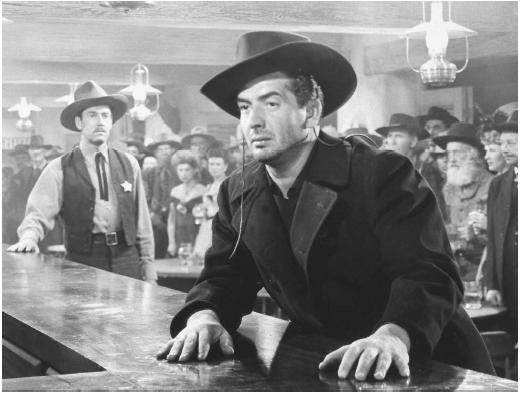
For my blog entry on My Darling Clementine, I'm going to talk about the significance behind the gunfight at the O.K. Corral. John Ford, the director of this movie, had rising suspense until this perticular scene so it would be much more significant. I personally thought this scene was crutial, because you get to see who the characters really are in the midst of all the chaos.
Overall, I truely thought this scene in the movie was necessary so the viewer can better understand the plot, which at times was confusing in my opinion. I also think this scene, and the events leading up to it, acts as a destinct finale for the sucess of this movie. In conclusion, I thought this scene was very important in the general meaning behind the film.

Wednesday, October 3, 2007

Citizen Kane

For my blog entry, I decided to talk about the various camera angles used in this film that helped emphasize characters, and places. The first angle I had often noticed, is that Kane was viewed usually from a low angle, while the other person he was talking to would be viewed from a high angle. This way of filming made Kane look significantly more powerful than the other person he was talking too. This angle alone helps the viewer feel how important Kane truely is in the story.

Another angle that Welles was famous for was the long tracking shot that went through the neon sign, and had eventually focused in on Susan. This shot is important because it shows how innovative Welles' way of filming is, in not just this scene, but the entire movie.

Overall, I thought that Welles had put alot of thought into the major sucess of this movie, by simply coming up with ways the camera could be used to it's advantage.

Sunday, September 30, 2007

The Day the Earth Stood Still

The Day the Earth Stood Still by Robert Wise is widely acclaimed as one of the most influential sci-fi films ever produced to date. I agree with this statement, even though this movie might be considered "cheesy" compared to today's standards. I also think that this movie has a good message, which in the bigger picture of the movie's purpose, is to promote world peace.

When this movie was produced in 1951, not many other sci-fi films existed. At this point in time, this movie was very popular due to its special effects and technology. Though these effects aren't as amazing as what is made today, they still played a major role in the success of this movie at that time.

Another technique that I have noticed with Robert Wise, is that during important scenes in the movie, musical motifs are often used to emphasize that particular scene. I have found this beneficial since it helped me be more alert so I got more out of that particular scene. I have noticed that the motifs help emphasize the main characters as well.

When I was about half way through the movie, I noticed that at the part when "the Earth stood still" there were rhythmic relations with each shot that showed different parts of the world and the music that corresponded. I personally thought that this technique of filming was very appropriate because I have never really before been able to point out rhythmic relations in modern films prior to this since, they are not as obvious as they were in this movie.

At the beginning of the movie, I noticed that there was an extreme long shot where the space-ship had landed in Washington, D.C. I thought that this shot was useful because it showed to scale how enormous the ship was compared to other things in its background. I also thought it was a good establishing shot as well.

In conclusion, I thought that this movie was pretty good, keeping in mind the time it was produced in. Overall the film used various techniques of filming that I have noticed to be useful in watching. This is definitely a classic to the genre of sci-fi.


Wednesday, September 26, 2007

My Favorite Movie

My favorite movie of all time for me is The Life Aquatic by Wes Anderson, hands down. The entire movie is hilarious, but also has a great plot that keeps you into the movie. The main reason of why I like it so much is because the movie has somewhat of a cheesy feel to it, but thats what makes Anderson's movies so funny and special.

I've noticed that alot of Anderson's movies have many subplots, this movie especially, that at times can be confusing. Though this may be true, he can always find ways to keep you interested in what happens next. Heres a quote from Chris Barsanti: "Even though Team Zissou doesn’t have much of a clear mission and the film’s subplots are scattered willy-nilly, Anderson and Baumbach’s script finds plenty of ways to keep viewers engaged."

Overall, this is my favorite movie on many levels. It has funny subplots, good actors, and most of all, a great story. I recommend this movie to anyone who hasen't seen it yet, you WILL enjoy it!!

Monday, September 17, 2007

The Royal Tenebaums


The Royal Tenebaums, by Wes Anderson, is said to be the best film of his career by many critics. This movie in particular was very popular to all sorts of new audiences, due to the cast. With actors such as Luke & Owen Wilson, Bill Murray, Ben Stiller, Gene Hackman, Gwyneth Paltrow, Anjelica Huston, and Danny Glover as the movies main cast, it's easy to say that the movie would inevitably be one of his best.

Jeffrey Anderson, from Combustible Celluloid, explains how significant the beginning of the film really is, and how Anderson stages it so the plot of the movie could succeed: "The film begins with rigid, widescreen compositions but melts ever so slowly as we warm to the characters and become involved in their emotional plights. By the time the sublime final shot comes around, we're fully won over."

My personal opinion of the film is that it is an excellent movie that is well worth watching. I also think that even though Wes Anderson's movies can seem long at times, he can always find a way to keep your attention. One of these techniques that I have noticed in his work is that while something important is happening, he shows the multiple characters' views on what the important event was like in their minds. This way of filming is perfect for his types of movies because there are so many main characters that are equally important to each other in the story line.

Another style of filming that I have noticed with Wes Anderson is that his films (particularly The Criterion Collection consisting of Rushmore, The Royal Tenenbaums, and The Life Aquatic) have such a nostalgic look to them. Wes Anderson is probably the only director I know of that can consistently utilize this method so well.

Jeffrey Anderson mentions how each character in this movie has such a major role in the significance of the plot, being that all of the family members are back together again after 17 years they had been apart. I thought it was important that he mentioned that because even I noticed when I watched the movie how much detail Anderson puts into each character. I think that it is those meticulous details that we learn about each character that sets Anderson apart from most directors.

In conclusion, I thought that the movie was extremely well done. Overall I agree with Jeffrey Anderson on many of the details we both noticed about the movie. Even though the movie was long in length, Anderson knew how to keep the movie interesting and hold your attention. I can honestly recommend watching this movie; it is well worthwhile and entertaining.